


Shopping for a space-saving bed can get confusing. One retailer calls it a wall bed, another calls it a Murphy bed, and somewhere else it’s a fold-down bed.
In most cases, they’re talking about the same basic idea: a bed that folds away against the wall when it’s not in use. The terminology can vary by brand and design, so below we unpack what each name usually means and whether the differences matter when you’re choosing one.
Key Takeaways
- Wall bed and Murphy bed are used interchangeably by most Australian retailers, including Troya.
- Murphy bed technically refers to the original patented design from the early 1900s, while wall bed is the broader modern category.
- Fold-down bed and folding bed usually describe the same wall-mounted system, not a portable guest bed or sofa bed.
What Is a Murphy Bed?
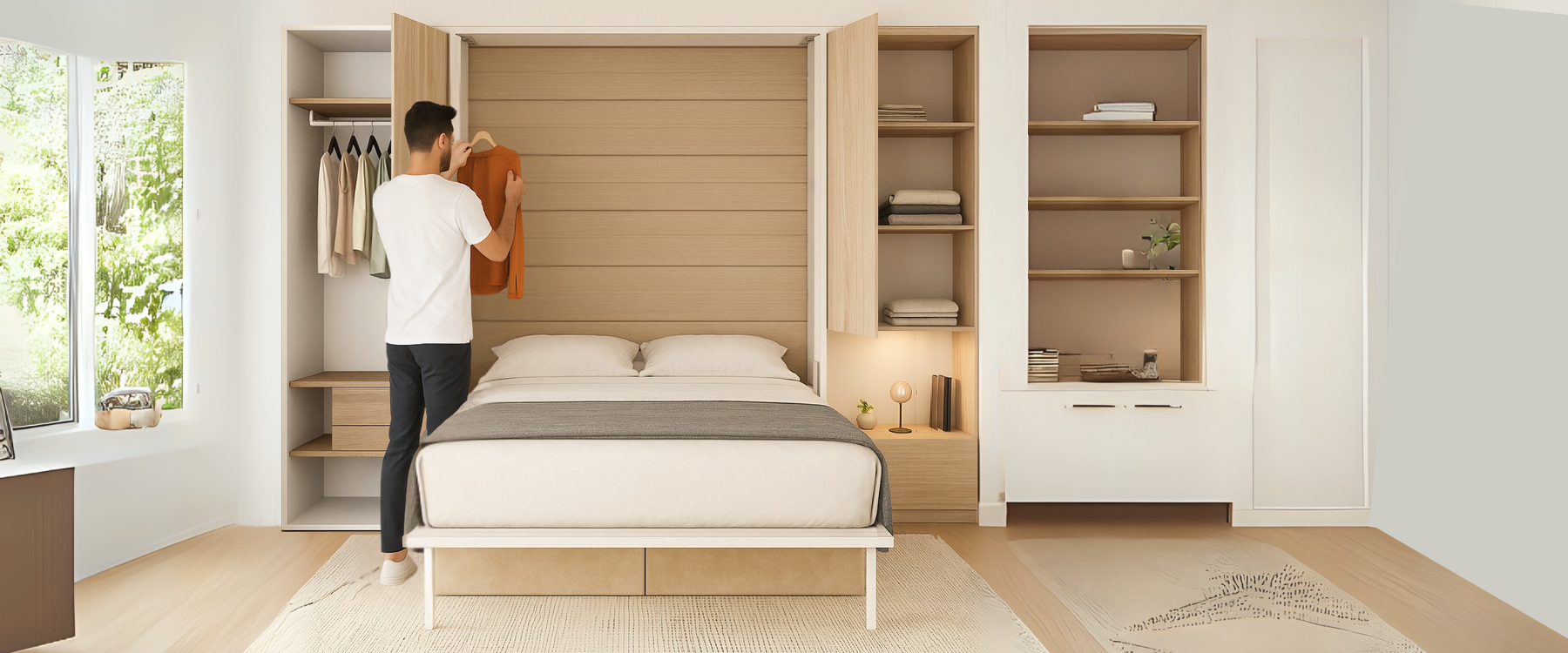
A Murphy bed is a bed that folds up into a wall-mounted cabinet or frame when you don't need it, then folds back down for sleeping. The name comes from William Lawrence Murphy, who patented the design in 1911. He'd built an earlier version in his one-room San Francisco apartment so it could double as a parlour during the day.
The invention became popular quickly. A wave of housing shortages in the early twentieth century meant smaller apartments were the norm. A bed that could disappear during the day suddenly mattered to a lot more people.

Is a Wall Bed the Same as a Murphy Bed?
For almost every practical purpose, yes. Most Australian and international retailers, Troya included, use "wall bed" and "Murphy bed" to describe the same product. If you search either term, you'll land on the same wall beds collection.
Where the terms start to diverge is in more technical or historical contexts:
- Murphy bed sometimes refers specifically to the traditional design, which is built around a spring-loaded counterbalance mechanism and a simpler frame.
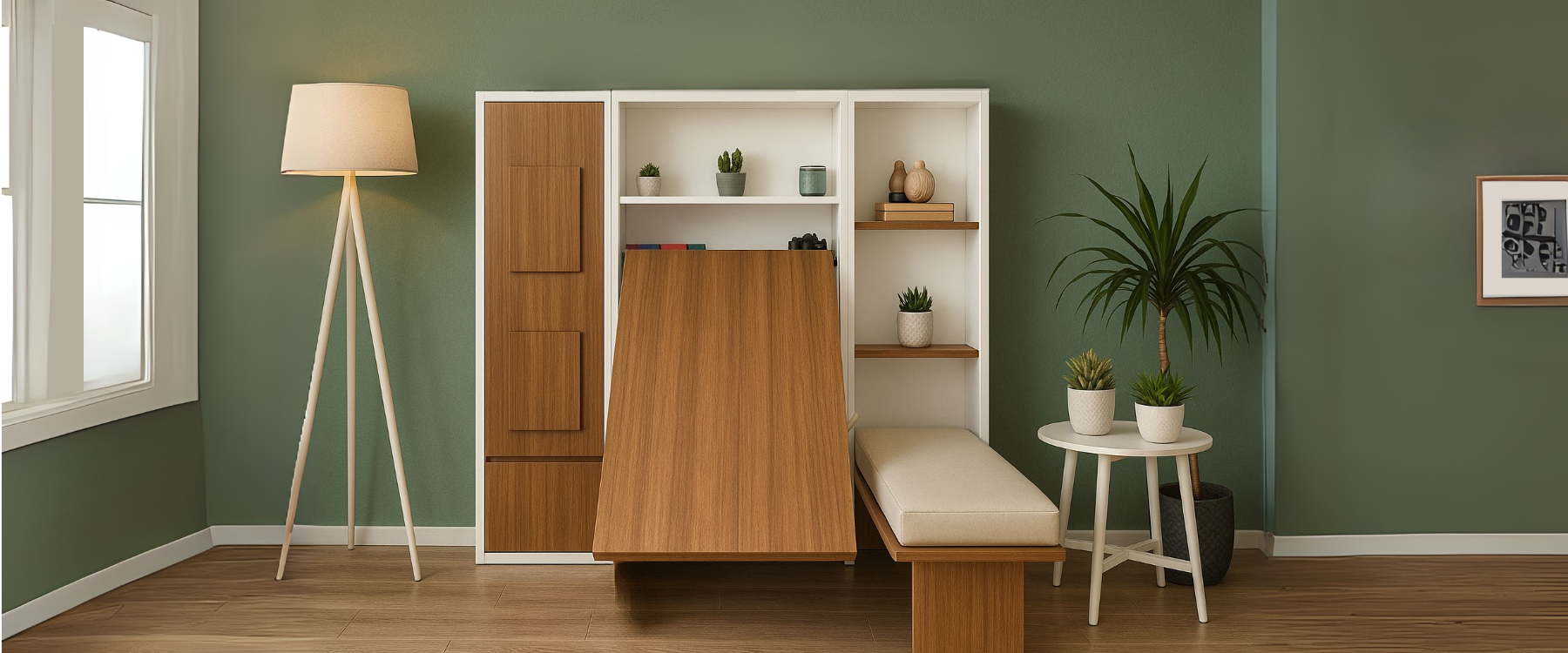
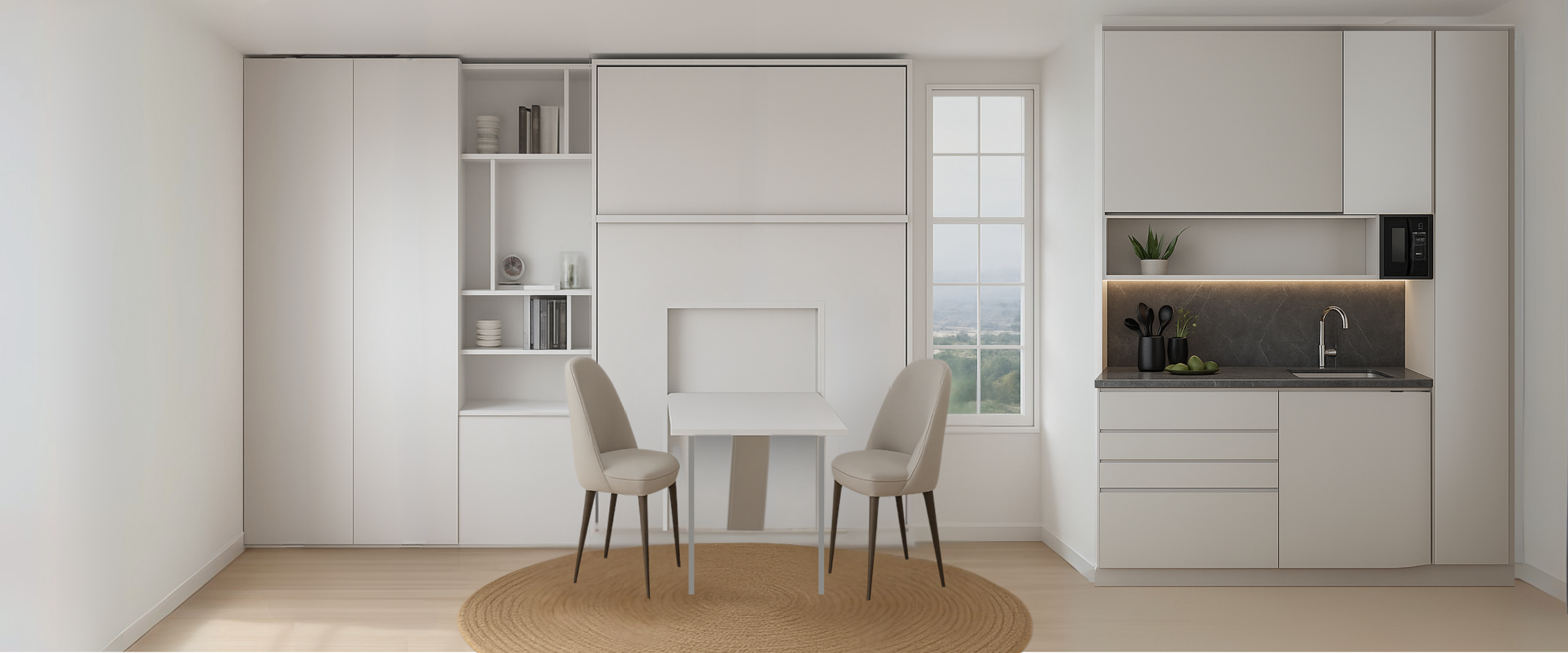
- Wall bed is often used as the umbrella term for the modern category, including cabinet-style units with piston mechanisms, integrated shelving and desk add-ons.
- Some brands trademark or lean into one term over the other for marketing reasons.
- "Murphy bed" is more common in the United States, while "wall bed" is the more typical term across Australia and the UK.
When comparing options, treat the terminology as a starting point and focus on the specifications that affect how the bed will actually work in your space.
Where Do Fold-Down and Folding Beds Fit?
"Fold-down bed" and "folding bed" usually describe the same wall-mounted system as a wall bed or Murphy bed. The name just focuses on the action rather than the brand history. These terms are not the same as:
- Portable folding beds, like camping stretcher beds or rollaway cots, which fold up small enough to store in a cupboard and don't attach to a wall at all.
- Sofa beds, which stay in the room permanently as seating and convert into a sleeping surface, rather than disappearing from view.
- Trundle beds, which slide out from underneath another bed and don't involve a wall mechanism.
A folding wall bed is fixed to a wall, engineered for repeated daily use, and designed to give a room its floor back. A listing that uses "folding bed" for something you can carry under one arm is describing a different category of product entirely.
The confusion mostly happens in search results rather than showrooms. Type "folding bed" into a search engine and you'll get a mix of camping cots, sofa beds and genuine wall bed listings, all competing for the same term. Knowing which category you want before comparing prices saves a lot of wasted browsing.

How Does a Wall Bed Work?
Every wall bed hinges at one end and pivots between two positions: folded up against or into the wall, and lowered flat for sleeping. What varies is the mechanism doing the lifting.
- Spring or counterbalance systems use tensioned springs to help lift and lower the mattress, and were the standard in older, traditional designs.
- Gas-piston mechanisms use a sealed piston that compresses and releases, giving a smoother and quieter motion that most modern wall beds now use.
- Manual folding systems rely on the frame's geometry alone, with no assisted lift, which suits lighter or smaller beds.
Orientation is a separate choice from mechanism.
- A vertical wall bed lowers from the top and needs decent ceiling height to swing clear.
- A horizontal wall bed pivots from the side and suits rooms with lower ceilings or awkward proportions.
Either orientation can pair with any of the three mechanisms above, so choosing between vertical and horizontal comes down to your room's shape, not the technology inside.
Whichever mechanism sits behind the panel, every wall bed needs to be properly anchored to a wall stud, not just leaned against the wall.

Come See For Yourself
Reading about pistons and counterbalances only gets you so far.
Visit our Williamstown showroom, fold a few models up and down, and you'll feel the difference between mechanisms in about thirty seconds. We'll help you match the right wall bed, whatever you want to call it, to your room.
Frequently Asked Questions
What do Australians usually call it: wall bed or Murphy bed?
"Wall bed" is the more common term in Australian retail, though "Murphy bed" is widely understood and used interchangeably.
Does a wall bed recess fully into the wall?
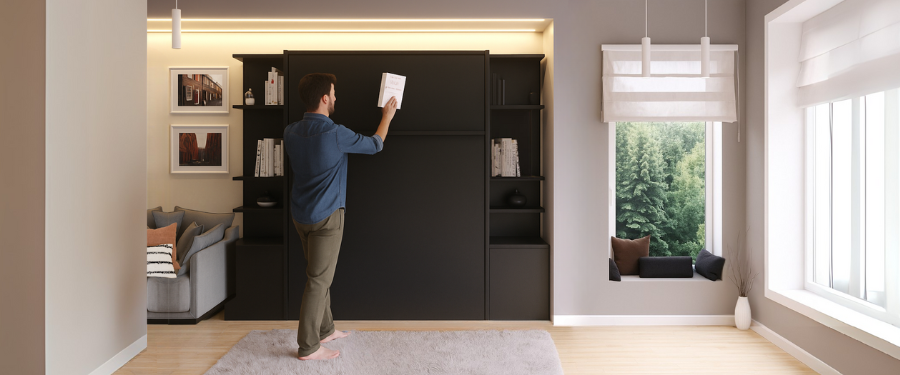
No. A wall bed sits against the wall inside a cabinet or frame, rather than disappearing inside the wall cavity itself. The cabinet is the visible piece of furniture when the bed is closed.
Is a fold-down bed less sturdy than a wall bed?
Not if it's the same style of product. "Fold-down" just describes the action, so a well-built folding wall bed is as sturdy as any other wall bed with a comparable mechanism.
Do all wall beds need professional installation?
Most manufacturers recommend it, since correct wall anchoring is a safety requirement, not a preference.
Is "cabinet bed" another name for the same thing?
Usually. "Cabinet bed" tends to describe a wall bed built into a piece of cabinetry with a finished exterior, rather than a different mechanism or product category.